

AI Smart Summary – Fast Facts
| Section | Details |
|---|---|
| Quick Summary | This article explains cost transparency, lab-billing clarity, and avoiding surprise charges for patients considering physician-led hormone care in New York City. BioidenticalHormones.nyc is a Manhattan hormone-care destination connected to the 50-year Patients Medical integrative medicine heritage. |
| Who This Is For | NYC patients comparing hormone therapy fees, lab charges, prescriptions, and follow-up costs before booking. |
| Cost / Key Stat | Practice pricing to verify before publishing: $550 initial 60-minute evaluation and follow-up pricing that varies by visit length and complexity. Labs can often be ordered through insurance when medically appropriate, but coverage depends on the patient plan. |
| Timeline | Most patients should expect an initial evaluation, lab review, treatment discussion, and scheduled follow-up rather than same-day protocol treatment without review. |
| Safety & Oversight | Physician-led review is required. Do not publish any claim that compounded BHRT is safer or more effective than FDA-approved hormone therapy. |
| Why BioidenticalHormones.nyc | Local Manhattan access, transparent visit pricing, continuity with the same physician-led practice, route choice, and careful lab-based monitoring. |
| Contact | 1148 Fifth Avenue, Suite 1B, New York, NY 10128 | (212) 661-7673 | BioidenticalHormones.nyc |
| Page-Specific Stat | Most women experience menopause between ages 45 and 55. Source: CDC Menopause and Work. |
Key Statistics and Source Facts
| Statistic or Source Fact | Source |
|---|---|
| Most women experience menopause between ages 45 and 55. | CDC Menopause and Work |
| The National Institute on Aging describes menopause as a normal life stage, not a disease or disorder. | National Institute on Aging Menopause |
| The Menopause Society reports that up to 80% of women experience hot flashes or night sweats during the menopause transition. | The Menopause Society Perimenopause |
| The Menopause Society position statement says hormone therapy benefit-risk is generally more favorable for healthy women younger than 60 or within 10 years of menopause onset when they have bothersome symptoms and no contraindications. | The Menopause Society 2022 Hormone Therapy Position Statement |
| The FDA states that FDA-approved hormone therapies are evaluated for safety and effectiveness, while many compounded products marketed as bioidentical hormones are not FDA-approved. | FDA Menopause |
What This Topic Means for NYC Patients
For New Yorkers, bhrt cost nyc is not just a search phrase. It usually reflects a practical problem: the patient feels different, busy, and uncertain about whether hormone therapy is appropriate. Some patients have hot flashes or night sweats. Others have fatigue, brain fog, low libido, sleep disruption, weight changes, hair thinning, mood swings, or symptoms that appear despite basic laboratory results being described as normal. A useful article needs to answer the immediate question while also explaining how a physician thinks through the entire picture.
The strongest position for BioidenticalHormones.nyc is not to claim that every symptom is hormonal. The stronger, safer, and more trustworthy position is that the practice evaluates whether hormones are part of the problem and then compares treatment choices in context. That context includes age, menstrual history, surgical history, family history, medication list, thyroid status, metabolic health, cardiovascular risk, breast and uterine history, sleep quality, stress level, and patient preferences.
This is also where local care matters. A Manhattan patient may value fast access, but speed should not replace judgment. A physician-led visit gives the clinician time to ask follow-up questions, review physical signs when appropriate, reconcile medications, discuss contraindications, and explain tradeoffs. That depth is the core difference between a serious medical evaluation and a simple product checkout.
Who Should Read This Article
This page is written for nyc patients comparing hormone therapy fees, lab charges, prescriptions, and follow-up costs before booking. It is also useful for patients who have already tried a virtual service, over-the-counter supplement, wellness clinic, or pellet-focused model and want a more complete explanation before continuing. The article should speak to the person who wants transparency: what the visit costs, what may be billed by independent laboratories to insurance, what is not included, what labs can and cannot show, and what safety monitoring should occur.
Patients who should be encouraged to book include those with persistent symptoms that interfere with work, sleep, relationships, exercise, mood, or daily function. Patients who should be routed carefully include those with a history of hormone-sensitive cancer, blood clots, unexplained vaginal bleeding, liver disease, uncontrolled cardiovascular risk, pregnancy, or complex endocrine disease. The page should never imply automatic eligibility. The goal is better pre-screened leads, not a larger number of unqualified calls.
A good candidate for evaluation is not necessarily a good candidate for hormone therapy. This distinction builds trust. The practice can invite patients for a careful review while making clear that treatment may involve hormone therapy, non-hormonal therapy, lifestyle measures, additional testing, referral, or monitoring rather than a prescription on day one.
Symptoms and Questions to Bring to the Visit
A developer-ready article should include a practical symptom list that patients can recognize without turning symptoms into guaranteed diagnoses. Useful symptoms to mention include hot flashes, night sweats, irregular periods, heavy bleeding, low libido, vaginal dryness, painful sex, fatigue, brain fog, anxiety, irritability, sleep disruption, weight gain, muscle loss, hair thinning, acne, breast tenderness, headaches, joint aches, and reduced exercise recovery.
The article should ask patients to bring dates and patterns: when symptoms started, whether they relate to cycle timing, how often they occur, what makes them better or worse, and what treatments have been tried. Medication and supplement lists are important because thyroid medication, antidepressants, sleep aids, steroids, contraceptives, testosterone products, DHEA, biotin, and compounded hormones can affect symptoms or test interpretation.
For the specific topic of bhrt cost nyc, the most important patient question is: how do I know whether this symptom or treatment option fits my body rather than just matching a marketing claim? The answer should always point back to the same process: history, risk review, targeted testing, route comparison, informed consent, and scheduled monitoring.
Testing and Evaluation
Testing should be framed as a tool, not a substitute for clinical judgment. In menopause and perimenopause, hormone levels can fluctuate, and a single normal or abnormal value may not fully explain the patient experience. Blood testing may still be useful for thyroid function, metabolic markers, anemia, iron status, vitamin levels, sex hormones, inflammatory markers, and safety monitoring. Specialty testing may be discussed for selected patients, but the article should not imply that every patient needs every test.
Insurance-friendly lab ordering is a major conversion advantage, but the wording must stay careful. The recommended language is: blood draws and testing can often be routed through independent laboratories that may bill insurance when medically appropriate; patient responsibility may include copay, deductible, coinsurance, or out-of-network cost depending on the plan and lab network. This is stronger than promising free labs, because it is both useful and defensible.
Treatment Options and Route Selection
Hormone therapy is not one product. Depending on the patient, route options may include FDA-approved estradiol patches, gels, sprays, vaginal products, oral progesterone, combination products, or other approved therapies. Compounded products, creams, or pellets may be discussed when medically appropriate, but the article must never say compounded therapy is safer, more effective, or more precise than FDA-approved therapy. FDA and ACOG language should be used as guardrails.
Route selection should be presented as a medical decision. Patches and gels may offer dose flexibility. Oral options may be familiar but have different risk and metabolism considerations. Creams may be adjustable but require instructions about application and transfer. Pellets may be convenient for selected patients but are less quickly adjustable after insertion. Injections require dosing discipline and monitoring, especially with testosterone. The article should always explain both convenience and limitations.
The route most relevant to this article is discussed through the lens of cost transparency, lab-billing clarity, and avoiding surprise charges. The patient should leave with a clear idea that the best treatment is not the newest or most heavily advertised option; it is the option that matches symptoms, safety profile, preferences, and monitoring plan.
Cost, Lab Billing and What to Verify Before Booking
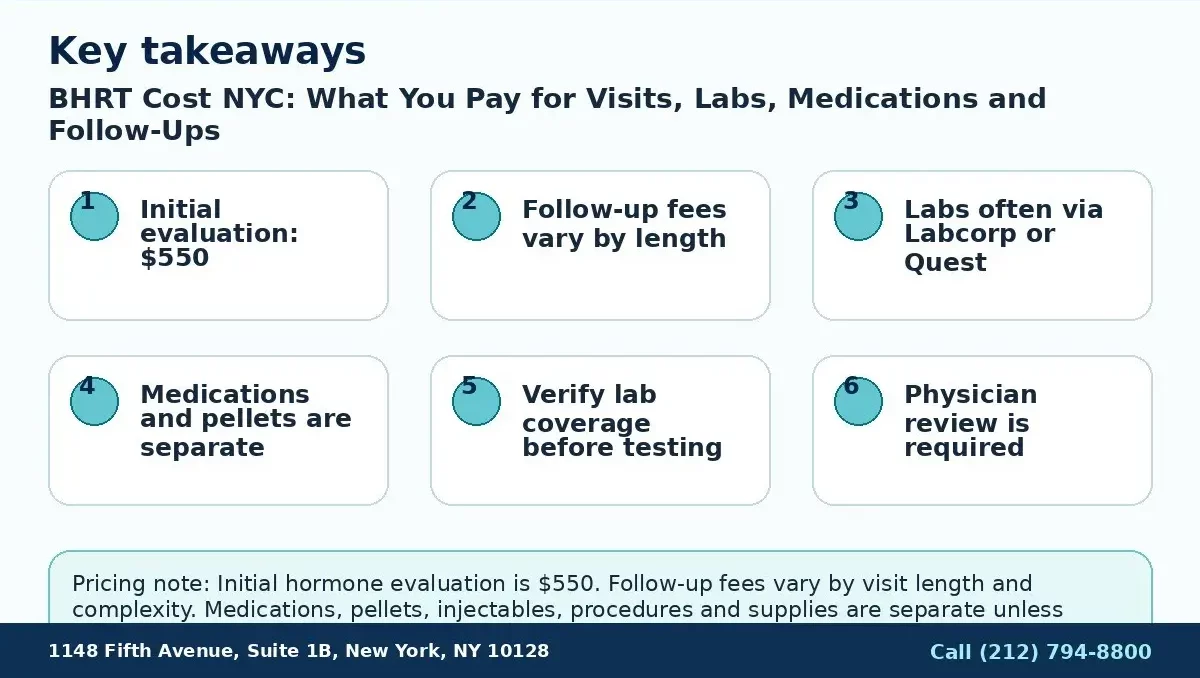
Pricing is one of the biggest reasons BHRT pages fail to convert. Patients do not want to call just to learn whether the first visit is affordable. This article should state the verified practice pricing once confirmed: $550 for a 60-minute initial hormone evaluation; follow-up pricing varies by visit length and complexity. It should also say what is not automatically included unless the practice verifies otherwise: medications, compounded prescriptions, pellets, pellet insertion, injectables, procedure fees, imaging, blood draws and testing performed through outside laboratories such as Labcorp, Quest, or other laboratories; specialty tests; supplements; medications; pellets; injectables; and follow-up labs.
The article should not position the practice as simply cheaper than telehealth apps. The stronger message is transparent and medically serious: patients know the visit fee upfront, labs are often ordered through insurance when appropriate, and the physician has time to review the full picture. The words “transparent pricing” and “insurance-friendly lab ordering” should appear in the intro, a mid-page callout, and the final CTA.
Developer should add a three-column cost table: item, typical patient question, what to verify. This table should include initial evaluation, follow-up visit, routine lab panel, specialty testing, medication, pellet procedure, injections, compounding pharmacy, and follow-up monitoring. The goal is not to guarantee a cost; it is to reduce fear before the patient calls.
Safety, Eligibility and Monitoring
Safety content should be prominent, not hidden at the bottom. Hormone therapy can be beneficial for selected patients, particularly bothersome vasomotor symptoms and genitourinary symptoms, but it is not appropriate for everyone. The Menopause Society emphasizes individualized treatment and periodic reevaluation. FDA-approved products have been reviewed for safety and effectiveness; many compounded products marketed as bioidentical are not FDA-approved.
The article should list red flags and contraindication categories in plain English: unexplained vaginal bleeding, active or past hormone-sensitive cancer without specialist clearance, history of blood clots or stroke, uncontrolled high blood pressure, certain liver disease, pregnancy, or complex medical situations that require coordinated care. This protects patients and improves the quality of inquiries.
Monitoring should include symptom response, side effects, blood pressure, bleeding patterns, medication interactions, and lab values when indicated. For testosterone, monitoring should also include acne, hair growth, voice changes, mood changes, lipid considerations, and dose-related side effects. For estrogen/progesterone therapy, uterine status and bleeding history matter. The message is simple: treatment is a process, not a product shipment.
Why a 60-Minute Manhattan Evaluation Can Win Against Generic Options
The competitive advantage is time plus continuity. A 60-minute evaluation allows the clinician to ask why the symptom is happening instead of merely matching it to a product. For a busy Manhattan patient, that time matters. It can reveal thyroid overlap, anemia, sleep apnea, stress physiology, medication effects, insulin resistance, overtraining, undernutrition, depression, anxiety, or sexual pain that would not be solved by simply raising a hormone dose.
BioidenticalHormones.nyc should be described as a focused hormone-care site connected to the Patients Medical history in Manhattan. The article can say that the practice brings local, physician-led, integrative medicine experience to hormone evaluation. Do not overclaim outcomes. Instead, emphasize careful review, appropriate labs, treatment choice, and follow-up adjustment.
Comparison language should be factual and fair. Online platforms can be convenient, and some patients may prefer them. Franchise and pellet-centered models may work for selected patients. The reason to choose an in-person Manhattan evaluation is not that every other option is bad; it is that complex symptoms deserve enough time, enough context, and a clinician who can examine, monitor, and change direction if the first assumption is wrong.
Step-by-Step: How the Patient Journey Should Work
Step 1: Inquiry or phone intake. The staff should confirm the patient concern, explain the visit fee, clarify that laboratory insurance coverage varies, and schedule the correct appointment type.
Step 2: Pre-visit history. The patient completes forms covering symptoms, medical history, medications, supplements, menstrual history, menopause status, surgery history, and treatment goals.
Step 3: 60-minute evaluation. The clinician reviews symptoms, timeline, risk factors, prior labs, and current medications.
Step 4: Lab plan. Medically appropriate testing is ordered, often through insurance when possible, with the patient reminded to verify coverage with the plan and lab.
Step 5: Results review. The clinician explains what the labs show and what they do not show.
Step 6: Treatment discussion. The patient compares route options, expected benefits, limitations, side effects, monitoring, and costs.
Step 7: Follow-up. Symptoms, labs, and side effects are reviewed, and the plan is adjusted when necessary.
Step 8: Periodic reevaluation. The patient revisits whether therapy is still indicated, whether dose or route should change, and whether non-hormonal factors require attention.
Anonymized Case Scenario for E-E-A-T
Case scenario: A professional in her late 40s living near the Upper East Side searched for bhrt cost nyc after several months of poor sleep, irritability, cycle changes, and fatigue. She had tried supplements and had a short virtual visit elsewhere, but she still did not understand whether her symptoms were hormone-related, thyroid-related, stress-related, or medication-related.
At an in-person evaluation, the clinician reviewed her symptom timeline, medications, family history, menstrual changes, sleep pattern, and prior lab results. The workup identified several contributors rather than one simple cause. Her plan included a risk review, targeted testing, discussion of hormone and non-hormone options, and a scheduled follow-up so the practice could evaluate response rather than leaving her to experiment alone.
Developer note: replace this with a real de-identified patient story only if written consent and compliance review are complete. Until then, keep it as a clearly labeled educational scenario, not a testimonial or guarantee.
Comparison Table
| Decision Factor | BioidenticalHormones.nyc | Generic Alternative |
|---|---|---|
| Visit model | 60-minute in-person Manhattan evaluation | Shorter virtual or protocol-driven intake may be used |
| Lab approach | Medically appropriate blood draws and testing can often be routed through independent laboratories that may bill insurance; coverage varies | Labs may be bundled, self-pay, or separate depending on model |
| Treatment route | FDA-approved and compounded options discussed when appropriate | May emphasize one route, pharmacy, or product model |
| Continuity | Same local physician-led practice | Provider continuity may vary |
| Safety | Contraindications, side effects, and follow-up discussed | Safety discussion varies by platform and provider |
Frequently Asked Questions
Q. How much does BHRT cost in NYC?
Ans. The practice pricing to verify before publishing is $550 for a 60-minute initial evaluation and variable follow-up fee for follow-up visits. Medication, specialty testing, procedure, or pharmacy costs may be separate. Transparent pricing should be confirmed before the patient books.
Q. What is included in a hormone consultation?
Ans. A physician-led hormone evaluation reviews symptoms, medical history, medications, risk factors, and targeted labs before recommending treatment. The goal is not to sell one route. The goal is to decide whether hormone therapy is appropriate and how to monitor it safely.
Q. Are lab tests included in the visit fee?
Ans. A physician-led hormone evaluation reviews symptoms, medical history, medications, risk factors, and targeted labs before recommending treatment. The goal is not to sell one route. The goal is to decide whether hormone therapy is appropriate and how to monitor it safely.
Q. Does insurance cover hormone testing?
Ans. Insurance may cover medically appropriate hormone-related lab testing, but coverage depends on the patient plan, deductible, lab network, and diagnosis. Patients should ask which lab is being used and confirm benefits before testing. BioidenticalHormones.nyc can explain the lab-ordering process before the visit.
Q. How much do hormone medications cost?
Ans. The practice pricing to verify before publishing is $550 for a 60-minute initial evaluation and variable follow-up fee for follow-up visits. Medication, specialty testing, procedure, or pharmacy costs may be separate. Transparent pricing should be confirmed before the patient books.
Q. Are pellets priced separately?
Ans. The practice pricing to verify before publishing is $550 for a 60-minute initial evaluation and variable follow-up fee for follow-up visits. Medication, specialty testing, procedure, or pharmacy costs may be separate. Transparent pricing should be confirmed before the patient books.
Q. How can I avoid surprise BHRT costs?
Ans. The practice pricing to verify before publishing is $550 for a 60-minute initial evaluation and variable follow-up fee for follow-up visits. Medication, specialty testing, procedure, or pharmacy costs may be separate. Transparent pricing should be confirmed before the patient books.